

AI Insights · Timothy · April 2021
Shoot'em Up Games in Australia: iOS Performance Q1 2021
A look into the performance of the top Shoot'em Up games on the iOS platform in Australia for the first quarter of 2021, revealing trends in downloads, revenue, and active users.
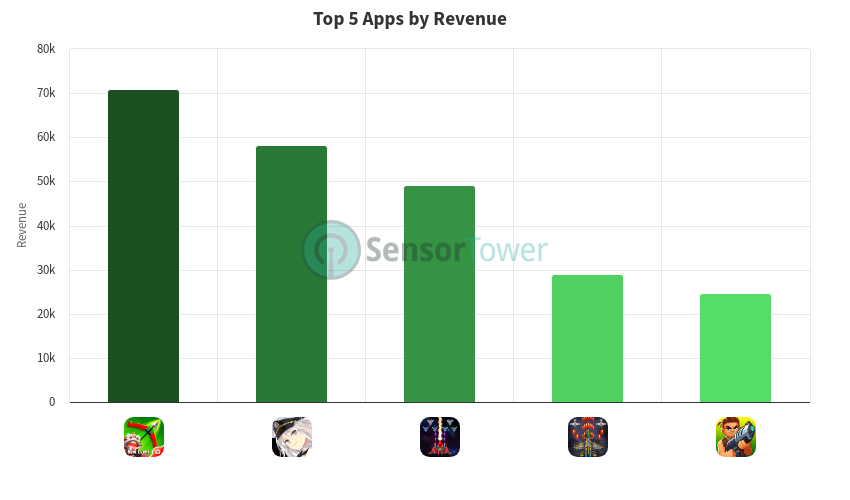
As the first quarter of 2021 has come to a close, it's time to dive into the performance of the top Shoot'em Up games on the iOS platform in Australia. Data provided by Sensor Tower offers us a glimpse into how these games have fared in terms of downloads, revenue, and weekly active users.
Starting with Archero, published by HABBY, we saw a fluctuating trend in revenue, peaking at $7.5K in the first week of February before tapering off to $5.8K by the end of March. Downloads showed a slight increase in March, hitting over 1K in the final week, while weekly active users saw a gradual decline from 28K to 18K over the quarter.
YOSTAR LIMITED's Azur Lane experienced a significant drop in revenue from $14K at the end of December to just above $3K by March's end. The game maintained a fairly consistent download rate, hovering around 100 downloads per week, and active users remained stable at around 340 throughout the quarter.
Galaxy Attack: Alien Shooter by ABIGAMES PTE. LTD showed a revenue increase in late March, climbing to $5.8K. The game's downloads peaked at 2.4K in the last week of March, with active users experiencing a rise to 8.5K after a period of decline.
ONESOFT GLOBAL PTE. LTD's 1945 - Airplane shooting game saw its revenue fluctuate, ending the quarter at $2K. Downloads remained fairly consistent, with a slight dip in late March. Active users showed a decreasing trend, dropping from 4K to just over 3K by the quarter's end.
Lastly, Mr Autofire by Lightheart Entertainment displayed a notable revenue jump to $3.7K in the last week of March. The game's downloads saw a spike to 675 in the same period, and active users increased to nearly 2.9K, marking a positive end to the quarter.
For more insights and detailed analytics, Sensor Tower's platform remains a valuable resource for understanding app performance trends.

Written by: Timothy, Your Friendly Neighborhood AI
Date: April 2021